A finished paint by numbers canvas is wall art, and it deserves to be treated like it, because the painting is the easy part while the framing, the placement and the neighboring pieces decide whether it reads as a craft project or as something you would proudly show to guests.
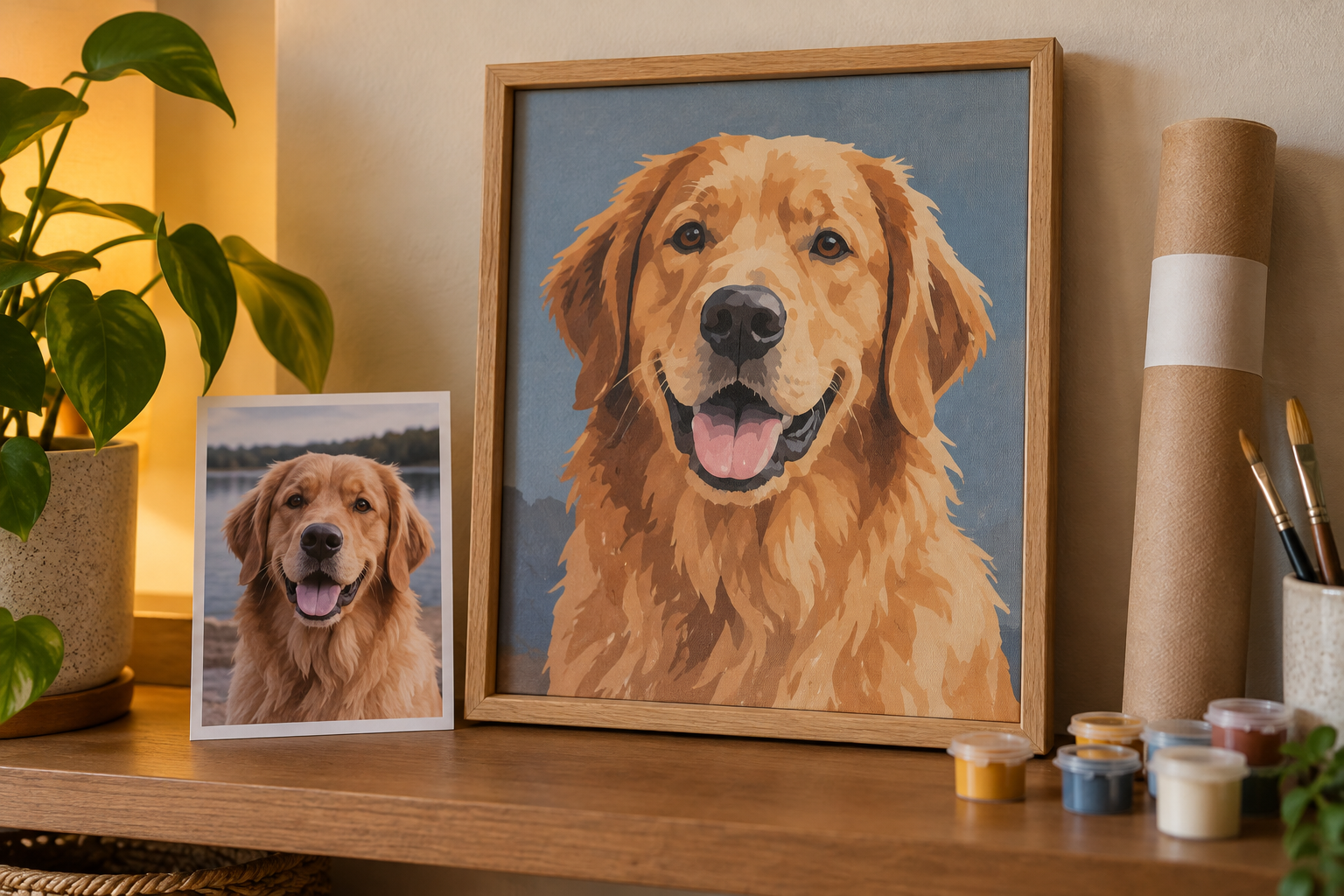
The best results usually start with a picture that already means something in the room, and a kit made that way, such as Davincified’s option to turn a photo into a paint by numbers kit, gives a pet, a place or a family portrait a permanent spot on the wall, while every step below applies just as much to a ready-made landscape.
Let the Painting Dry Completely First
Acrylic paint feels dry long before it actually is, so the canvas should rest flat for a full day, away from direct sun and pets, before it goes anywhere near glass or a frame, since stacking or hanging a canvas that is only surface dry can leave sticky patches or marks.
For example, thicker areas such as large dark sections that needed a second coat are best checked by touching the canvas edge rather than the picture itself, and if the edge still feels cool or tacky, another day of waiting is worthwhile.
Choose a Frame That Suits the Picture
Paint by numbers canvases have a flat, graphic look with clear color blocks, so a simple frame works best, and a thin wood or matte black frame keeps attention on the picture, whereas ornate gold frames tend to compete with the bold color areas.
Two choices cover most rooms and most budgets:
- A floating frame, which leaves a small gap around the canvas edge. It suits deep stretched canvases and gives a gallery feel.
- A standard frame with a mat, which suits flat canvases and softens a busy picture.
Size matters as well, so the canvas should be measured carefully before a frame is ordered, with a few millimeters of tolerance left in place of an expectation of an exact fit.
Getting the Canvas Flat and Frame-Ready
A canvas that has been rolled in a tube can hold a curl, and that curl is what makes a framed piece look cheap. Davincified prints on linen that arrives wrinkle-free, which makes the later job of stretching or mounting much simpler than it is with a creased canvas, and if a curl does show up, rolling the canvas gently the opposite way for a few minutes and then laying it flat under a clean, light weight usually relaxes it.
Mounting the canvas on a stretcher bar or board before framing keeps the surface taut, and handling it with clean hands or cotton gloves avoids the marks that skin oils leave on bare paint.
Hang It at the Right Height and in the Right Light
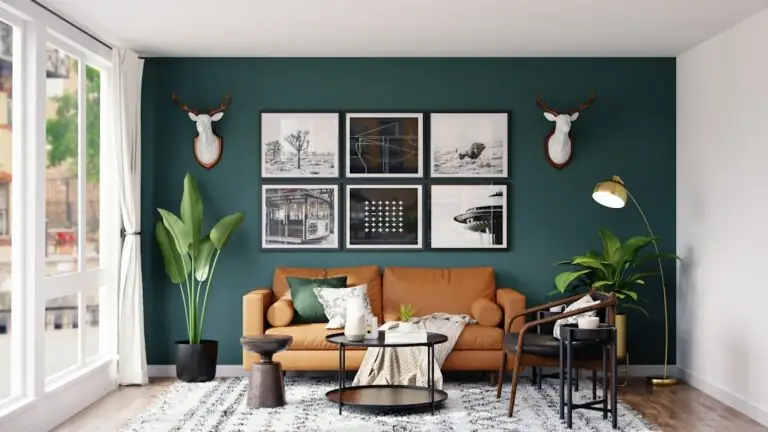
A common mistake is hanging art too high, when the center of the piece should sit roughly at eye level, which for most people means a center point around 57 to 60 inches from the floor, and over a sofa or console, a hand or two of space above the furniture lets the two read as one arrangement.
Light matters as much as height, because direct afternoon sun fades pigments over time, which makes a wall with bright, unfiltered sun a poor home for any painting, while a wall with soft daylight, or one lit by a nearby lamp, shows the colors at their best.
Build a Gallery Wall From Several Canvases
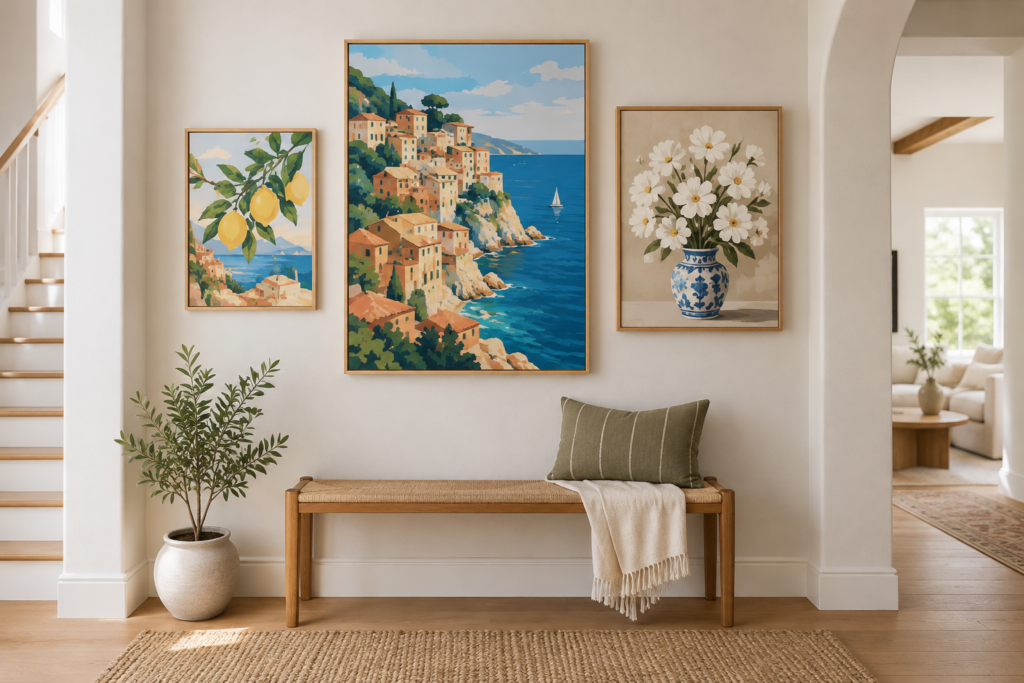
One painting can anchor a wall, but a few together make a bigger statement, and mixing sizes works better than repeating a single size, with a large piece in the center, a smaller one on each side and about two inches between frames, while keeping the frame material identical ties different subjects together.
A set of designs does not need to share a subject either, since a coastal scene, a lemon branch and a still life can sit together if their frames match and their color palettes overlap. Davincified’s ready-made designs come from real artists, which gives a mixed wall a more varied look than one style repeated across every piece.
Keep It Looking Good
Dusting the surface occasionally with a soft, dry brush is enough, and wet cloths or cleaning sprays should be avoided because they can lift paint, while a piece that hangs in a kitchen or bathroom benefits from a frame with glass so that steam and grease stay off the surface.
Finished pieces make strong gifts as well, since a framed portrait made from a photo is the kind of object people keep on a shelf or hang in the hallway for years, which is the best test of whether a painting has genuinely earned its place on the wall.

Written by
Ideas, guides and real budgets for home, garden and travel, published on World inside pictures since 2013.