
You open a cupboard, something falls out, you close it again and walk away. If that sounds familiar, you’re not lazy and you’re not alone. Clutter is overwhelming precisely because it is everywhere at once, and when every room needs attention, it’s hard to know where to begin. The secret is not more motivation. It’s a plan that starts so small it feels almost too easy.
This guide shows you how to start decluttering when you feel overwhelmed: the mindset that makes it manageable, what to do in your first 15 minutes, the best order to tackle each room, a simple 30-day plan, and how to stop the clutter from coming back.
First, change how you think about decluttering
- Small beats perfect. Fifteen minutes a day will clear more over a month than one exhausting weekend that leaves you never wanting to do it again.
- One area, not one room. “Declutter the kitchen” is overwhelming. “Clear the cutlery drawer” is not. Always pick a space you can finish in one session.
- Progress you can see. Start with spots you look at every day, such as the kitchen counter or the bathroom sink. Seeing them clear keeps you going.
- Decisions are the hard part. Tiredness from decluttering comes from making hundreds of small choices. Start with the easy ones and leave sentimental items until last.
What you need before you start
Set yourself up with the four-box method. Grab four boxes, baskets or bags and label them:
- Keep: things you use or love that belong in this space.
- Donate or sell: things in good condition that someone else could use.
- Trash or recycle: broken, expired, stained or useless items.
- Relocate: things that belong in another room.
You’ll also want a timer, a bin bag, and a plan for where your donations will go. Put a donation drop-off in your calendar now so the bags don’t sit in your hallway for months.
Your first 15 minutes
If you do nothing else today, do this:
- Set a timer for 15 minutes.
- Walk through your home with a bin bag and remove obvious trash only: packaging, junk mail, empty bottles, broken things, old receipts.
- Clear one surface you see every day, such as the kitchen counter, your bedside table or the coffee table.
- Stop when the timer goes off, even if you’re on a roll.
Stopping on time is important: it keeps decluttering from feeling like a punishment, so you’ll actually come back to it tomorrow.
The best order to declutter your home
Start where decisions are easy and finish where they are emotional. This order builds your “decision muscle” before you reach the hard stuff.
1. Bathroom
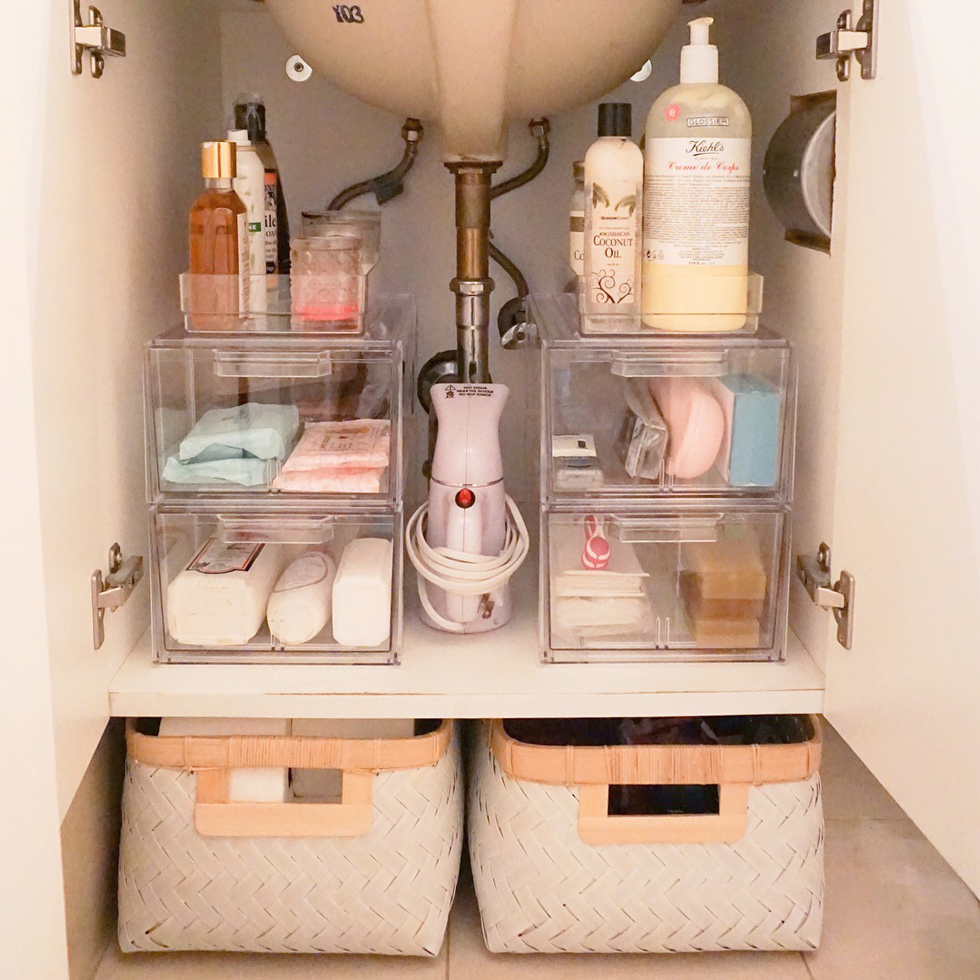
The perfect first room: small, quick and full of easy decisions. Throw away expired medicines (return them to a pharmacy where possible), dried-up makeup, empty bottles and samples you’ll never use. Keep only one or two of each product in use. Our bathroom organization tips help you store what’s left.
2. Kitchen
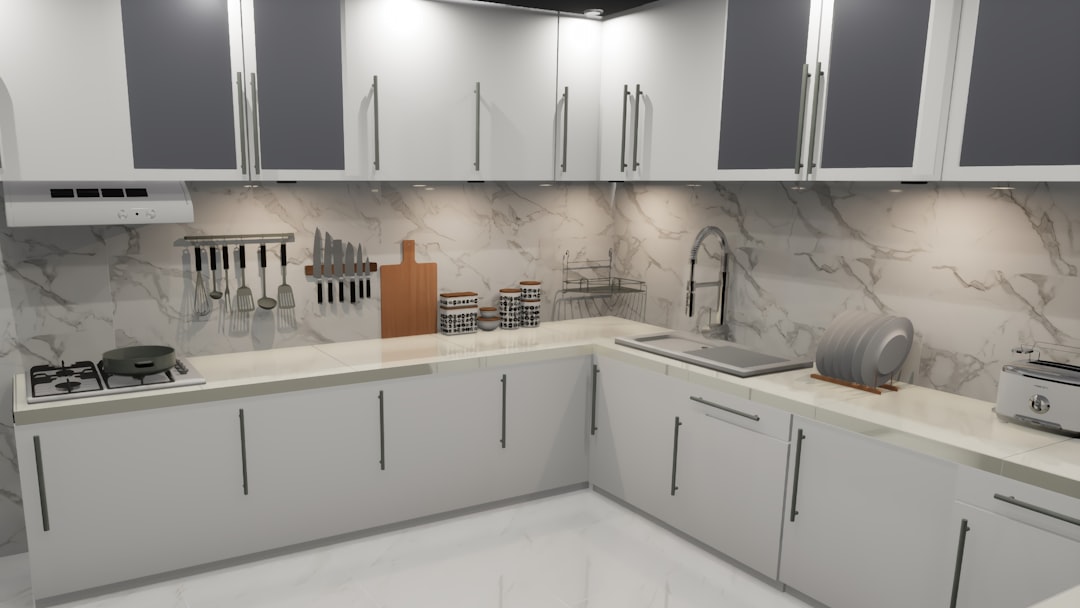
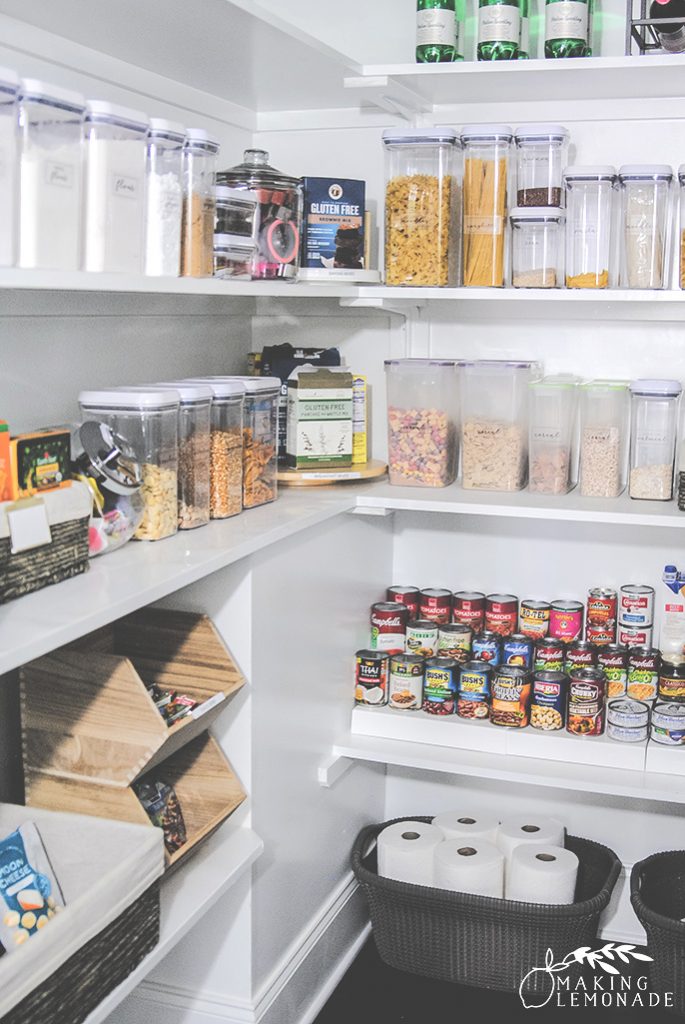
Work one zone at a time: counters, then the fridge, then the pantry, then one cupboard or drawer per session. Get rid of expired food, duplicate gadgets, mismatched containers without lids and mugs you never use. Clear counters make the biggest visual difference in the whole house.
3. Bedroom and wardrobe
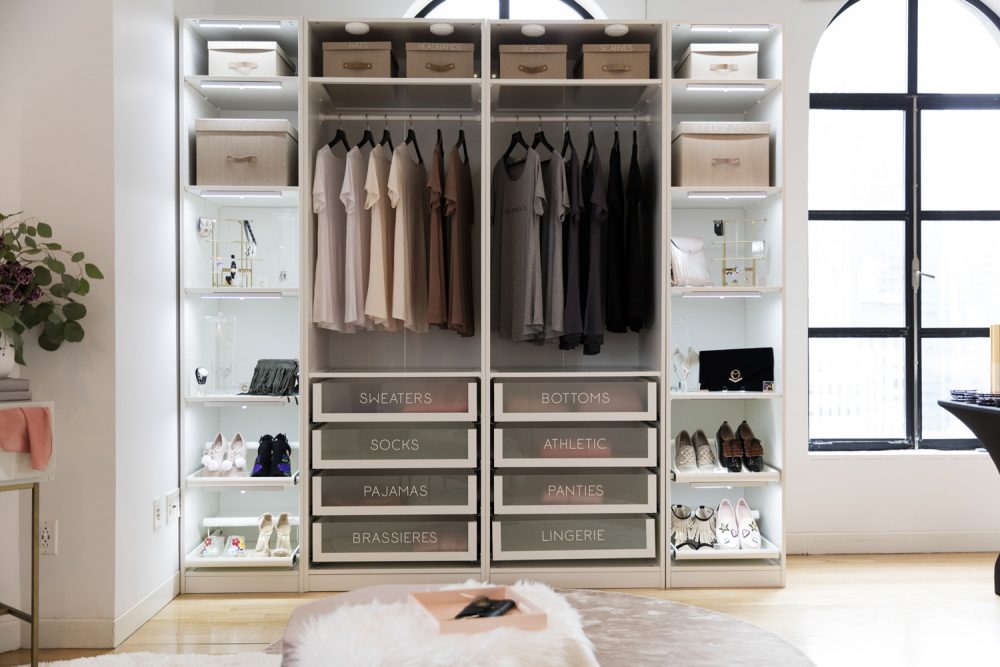
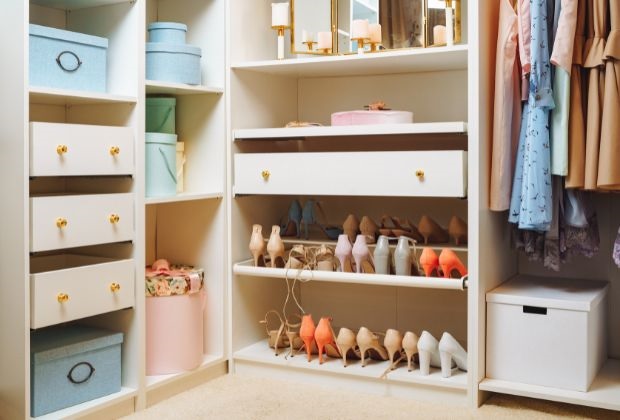
Clothes are where most homes hold the most clutter. Take everything out of one category at a time, such as all your T-shirts, and keep only what fits, feels good and you’ve worn in the last year. A useful trick: turn all your hangers backwards, and turn each one around when you wear that item. After six months, the backwards hangers show you what you don’t wear. Our guide on how to declutter your wardrobe goes step by step.
4. Living room
Clear the surfaces first, then shelves, then storage units. Old magazines, DVDs, cables for devices you no longer own, dead batteries and decorations you don’t love can all go. Give everything that stays a “home” so tidying up takes minutes.
5. Entryway, closets and storage spaces
Hall closets, under-bed storage, the garage and the loft hide years of “maybe one day” items. Tackle them in short sessions and be honest: if you didn’t know it was there, you probably don’t need it.
6. Paperwork
Sort paper into three piles: action (bills to pay, forms to sign), keep (important documents), and recycle or shred. Switch to paperless statements to stop new piles arriving, and keep important documents together in one labeled file. Check local guidance on how long to keep tax and financial records.
7. Sentimental items, last
Photos, letters, children’s artwork and inherited items are the hardest to decide on, so leave them until your decluttering confidence is high. Keep the best pieces rather than all of them, display what you love, and photograph items you want to remember but don’t need to keep. Give yourself permission to go slowly here.
A simple 30-day decluttering plan
| Week | Focus (15–30 minutes a day) |
|---|---|
| Week 1 | Trash walk, kitchen counters, bathroom cabinet, shower, medicine and makeup, fridge, one kitchen drawer |
| Week 2 | Pantry, kitchen cupboards, food containers, mugs and glasses, cleaning cupboard, under the sink, donation drop-off |
| Week 3 | Wardrobe by category: tops, bottoms, shoes, coats, bags, bedding and towels, bedside tables |
| Week 4 | Living room surfaces, shelves, entryway, hall closet, paperwork, digital clutter, one sentimental box |
Miss a day? Just pick up where you left off. The plan works because it is small and steady, not because it is perfect.
Questions that make decisions easier
- Have I used this in the last 12 months?
- If I lost it, would I buy it again today?
- Do I have another one that does the same job?
- Am I keeping this out of guilt, or because I use or love it?
- Would I pack it if I moved house tomorrow?
If you’re stuck on an item, put it in a “maybe” box with today’s date. If you haven’t opened the box in three to six months, donate it without looking inside.
Popular decluttering methods to try
- The 12-12-12 challenge: find 12 things to throw away, 12 to donate and 12 to put back where they belong.
- The 90/90 rule: if you haven’t used it in the last 90 days and won’t in the next 90, let it go (adjust for seasonal items).
- One in, one out: every time something new comes in, something similar leaves.
- Joy-based decluttering: sort by category and keep only what you genuinely use or love, an approach made famous by Marie Kondo.
- The minimalism game: remove one item on day one, two on day two, and so on for a month.
Where to take what you don’t keep
- Donate clothes, books, toys and homeware in good condition to charity shops, shelters or local groups.
- Sell furniture, electronics and branded items online. Set a deadline: if it hasn’t sold in two weeks, donate it.
- Recycle paper, glass and plastics, and take electronics, batteries and light bulbs to proper collection points.
- Dispose safely of old paint, chemicals and medicines according to local rules.
How to keep clutter from coming back
- Give everything a home. Clutter is simply things without a place to live.
- Create a landing zone by the door with hooks, a tray for keys and a basket for post.
- Do a 10-minute evening reset: put things back, clear surfaces, load the dishwasher.
- Keep a donation bag in a wardrobe and drop it off whenever it’s full.
- Pause before buying. Wait 48 hours before non-essential purchases and ask where the item will live.
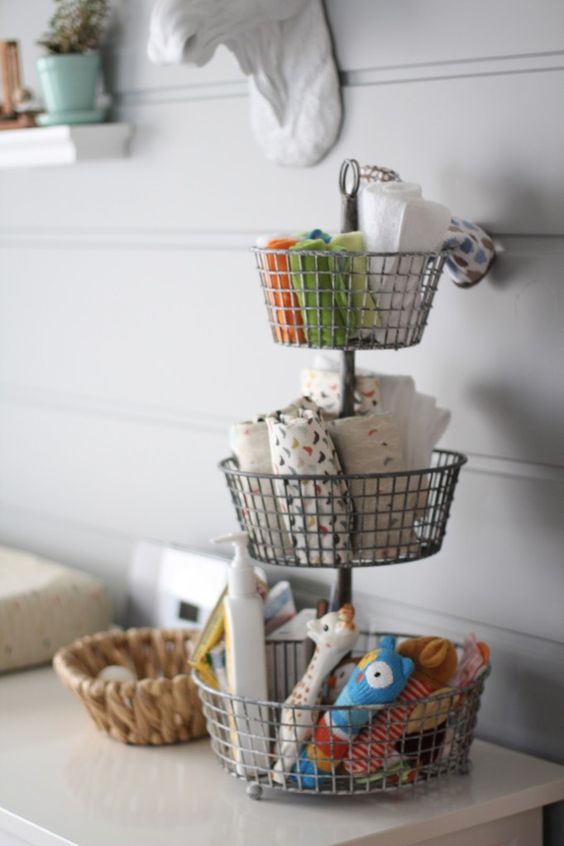
Once you’ve decluttered, organizing becomes easy. Our home organization ideas go room by room, our pantry organization tips and desk organization ideas tackle the trickiest spots, and our cleaning hacks keep everything fresh. For more inspiration, see how to effectively declutter your home.
If clutter is causing you real distress, or you find it very hard to let go of things, you’re not failing at tidying. Talking to your doctor or a professional organizer can help, and there is good support available for hoarding difficulties.
Frequently asked questions
Where should I start decluttering when I’m overwhelmed?
Start with a 15-minute trash walk and one surface you see every day, such as the kitchen counter. Then move on to the bathroom, which is small and full of easy decisions, before tackling bigger rooms.
What is the 20/20 rule for decluttering?
If you could replace an item for less than $20 in less than 20 minutes, you can safely let it go instead of keeping it “just in case”. It’s a helpful rule for spare cables, extra kitchen tools and duplicate supplies.
How long does it take to declutter a whole house?
For most homes, about a month of short daily sessions, or several full weekends. Larger homes and homes with lots of storage spaces or sentimental items can take longer, and that’s fine.
Should I declutter by room or by category?
Both work. Room by room is easier when you feel overwhelmed, because you can see progress. Category by category, such as all clothes or all books, is more thorough because you see everything you own at once. Many people declutter by room first and by category later.
How do I stay motivated to declutter?
Keep sessions short, start with visible areas, take before and after photos, and reward yourself by dropping off donations straight away. Seeing a clear counter every morning is the best motivation there is.

Written by
Ideas, guides and real budgets for home, garden and travel, published on World inside pictures since 2013.