Feng shui is the ancient Chinese practice of arranging your surroundings so that energy, or chi, flows smoothly through a space. Of all the rooms in a home, the bedroom matters most: it is where you rest, recover and connect with a partner. Whether you follow feng shui closely or just like the idea of a calmer room, its bedroom rules overlap a lot with good design and good sleep habits.
Here are the essential feng shui bedroom rules, the most common mistakes to avoid, and simple fixes for awkward rooms where the “perfect” layout isn’t possible.
Feng shui bedroom rules at a glance
| Do | Don’t |
|---|---|
| Place the bed in the commanding position, with a view of the door | Put the bed directly in line with the door |
| Use a solid headboard against a solid wall | Sleep under a window, beam or sloped ceiling if you can avoid it |
| Leave space on both sides of the bed | Push the bed into a corner |
| Use matching nightstands and lamps | Face a mirror towards the bed |
| Keep the space under the bed clear | Store clutter, work or exercise gear in the bedroom |
| Choose soft, earthy and skin-toned colors | Fill the room with bright, stimulating colors |
| Use warm, dimmable lighting | Keep a TV and laptop facing the bed |
1. Put your bed in the commanding position
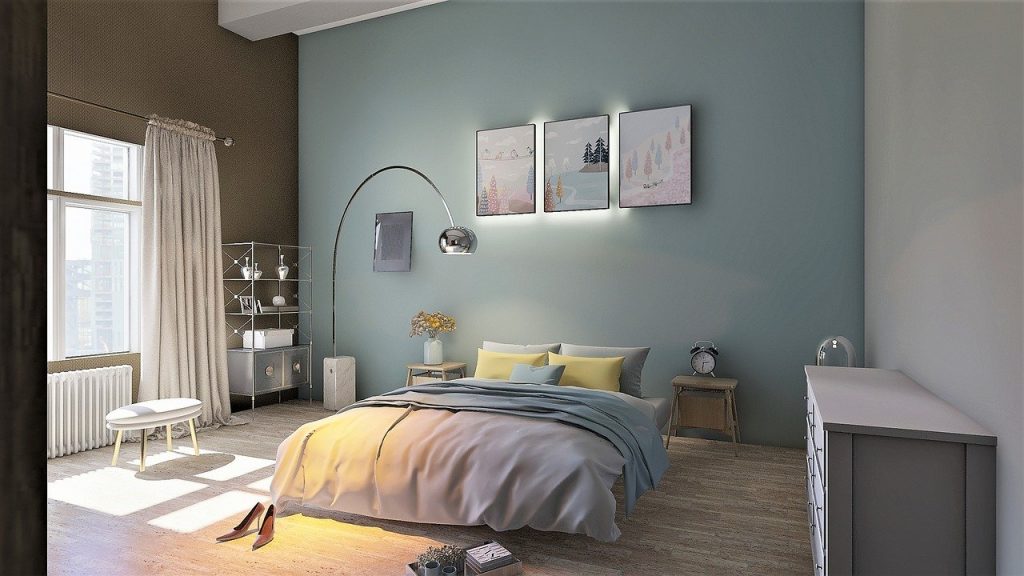
This is the most important feng shui bedroom rule. When you lie in bed, you should be able to see the door without being directly in line with it. In practice, that usually means placing the bed on the wall diagonally opposite the door. The idea is that you feel safe and in control of your space, which helps you relax.
Avoid the “coffin position”, where your feet point straight out of the door. If you can’t move the bed, put a bench or chest at the foot of the bed to create a buffer.

2. Choose a solid headboard against a solid wall
A solid wood or upholstered headboard represents support and stability. Avoid headboards with bars, gaps or open slats. Place the bed against a solid wall rather than under a window, where energy (and drafts) can feel unsettling. If the window is the only option, use a tall, solid headboard and heavy curtains you can close at night.

3. Leave space on both sides and balance them
Feng shui favors a bed that can be reached from both sides, with a nightstand and lamp on each. This balance is said to support equality in a relationship, and if you are single, it leaves room to welcome a partner. Pushing one side against the wall blocks that energy, and it also makes the bed harder to make.

4. Clear the clutter, especially under the bed
Clutter is the enemy of good feng shui. Piles of clothes, paperwork and boxes are believed to block the flow of energy, and they certainly make a room feel less restful. The space under the bed matters most: ideally keep it empty so air can circulate. If you need the storage, limit it to soft items such as spare bedding, and avoid anything with emotional weight like old letters or exercise equipment.

5. Be careful with mirrors
Mirrors facing the bed are one of the best-known feng shui “don’ts”. They are said to bounce energy around the room and disturb sleep, and many people simply find it unsettling to catch their reflection at night. Place mirrors where they don’t reflect the bed, such as inside a wardrobe door, or cover mirrored wardrobe doors with curtains or film.
6. Keep work and screens out
Desks, laptops, exercise equipment and TVs bring active, “yang” energy into a room meant for rest. If you have no choice, place the desk as far from the bed as possible and cover it or close it away at night, and hide a TV in a cabinet or behind doors. Charging your phone outside the bedroom is also one of the easiest ways to sleep better.
7. Avoid beams, sharp corners and sloped ceilings over the bed
Exposed beams and low slopes directly above the bed are said to create a feeling of pressure. If you can’t move the bed, soften them: paint the beam the same color as the ceiling or drape fabric beneath it. Sharp corners of furniture pointing at the bed, known as “poison arrows”, can be softened with plants, fabric or rounded furniture.
8. Choose calm, balanced colors
Feng shui links colors to the five elements: wood, fire, earth, metal and water. For a bedroom, the most restful choices are:
- Skin tones and earth colors such as cream, sand, terracotta and soft brown, for warmth and stability.
- Soft greens and blues for calm and renewal, used in muted shades rather than bright ones.
- A touch of red or pink (fire element) in cushions or art for passion and romance, in small doses.
Avoid large areas of very bright or very dark color, which are seen as too stimulating or heavy. Several 2027 paint picks, such as soft sages and earthy olives, happen to fit these rules perfectly. See our Color of the Year 2027 guide for ideas.

9. Use soft, layered lighting
Harsh overhead light works against a restful bedroom. Use bedside lamps, wall lights or a dimmable ceiling light with warm white bulbs, and let in plenty of natural light during the day. Good-quality curtains or blinds that block light at night help you sleep deeply.

10. Choose art and décor with care
- Art: choose calm, uplifting images, such as landscapes, flowers or abstract art in soft colors. Avoid scenes of water crashing, storms or lonely single figures.
- Pairs: for couples, decorate in pairs, such as two lamps, two cushions or two birds in a print, to symbolise partnership.
- Family photos: keep photos of parents, children and friends in living areas rather than watching over your bed.
- Water features: fountains and aquariums are considered too active for the bedroom; place them elsewhere in the home.
- Plants: traditional feng shui suggests few or no plants in the bedroom. If you love them, choose one or two with soft, rounded leaves rather than spiky ones.
What if your bedroom layout doesn’t allow it?
- Bed has to face the door: add a solid footboard, bench or chest at the foot of the bed.
- Can’t see the door from the bed: place a small mirror so you can see the door’s reflection without the mirror facing the bed.
- Bed under a window: use a tall, solid headboard and close heavy curtains at night.
- Small room with the bed against a wall: leave as much space on the open side as possible and still use two light sources.
- Bathroom door facing the bed: keep it closed, and hang a curtain if needed.
For more ways to make your bedroom a calm retreat, browse our bedroom ideas, see our home organization ideas for decluttering tips, or explore different looks in our guide to interior design styles.
Frequently asked questions
What is the most important feng shui rule for a bedroom?
The commanding position: place your bed so you can see the door while lying down, without being directly in line with it, ideally with a solid headboard against a solid wall.
Which direction should a bed face in feng shui?
The position relative to the door matters more than the compass direction. Some feng shui schools also recommend a direction based on your personal “kua” number, but the commanding position comes first.
What is bad feng shui in a bedroom?
The most common problems are a bed in line with the door, a mirror facing the bed, clutter under the bed, a bed under a window or beam, work and screens in the room, and pushing the bed against a wall so only one side is open.
Can you have plants in a feng shui bedroom?
Traditional feng shui keeps plants to a minimum in the bedroom because they carry active, growing energy. Many practitioners are happy with one or two healthy plants with soft, rounded leaves, placed away from the bed.
What colors are good for a feng shui bedroom?
Soft, warm and earthy shades such as cream, beige, blush, terracotta and muted greens and blues. Use bright red sparingly as an accent.

Written by
Ideas, guides and real budgets for home, garden and travel, published on World inside pictures since 2013.